The Conundrum of Kalonji: Sizzla’s Divisive Yet Undeniable Legacy in Reggae 🎶 https://music.youtube.com/watch?v=FRq86GWWX_U&si=2EMxfqQk_rE74VPW
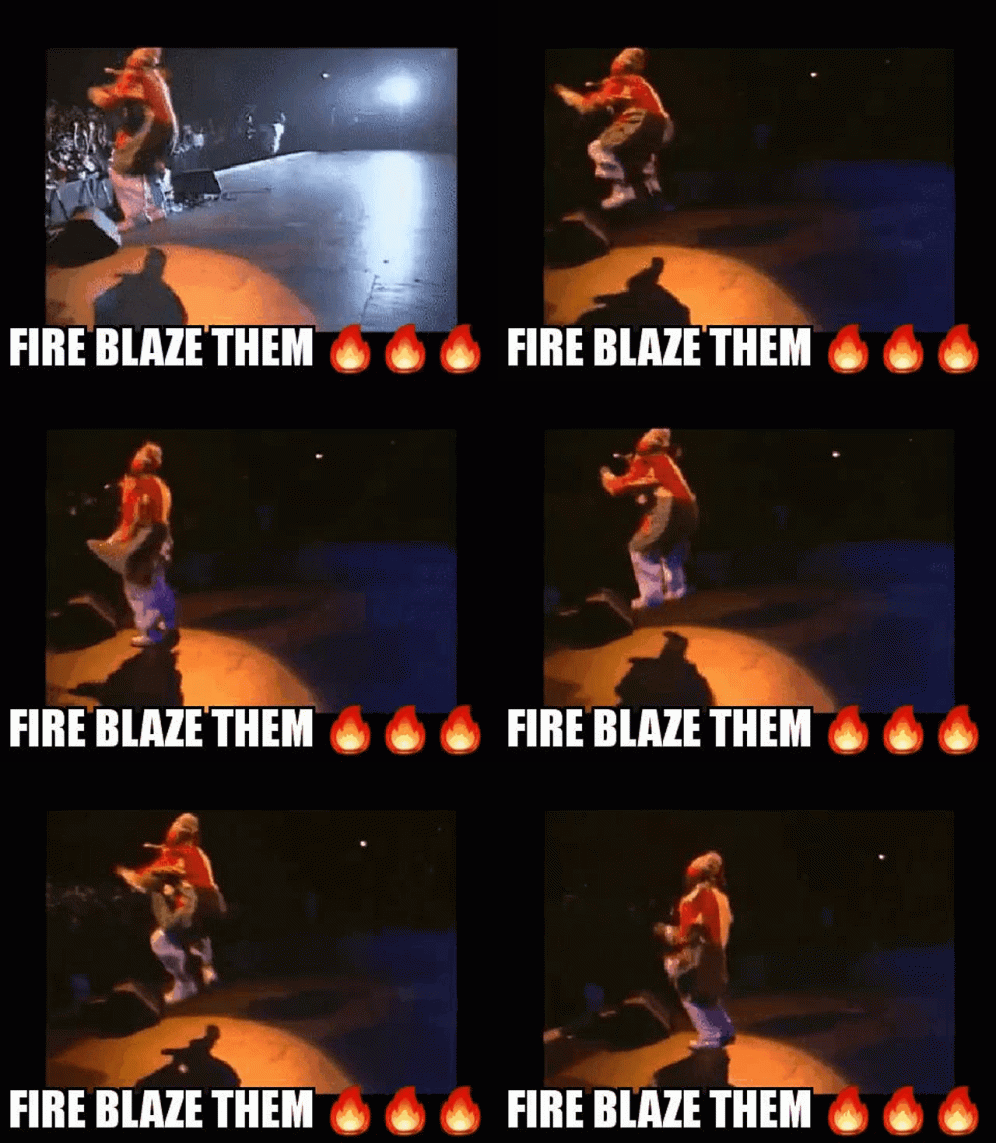
Sizzla Kalonji, one of contemporary reggae’s most prolific and impactful figures, presents a unique and often contradictory legacy. His emergence in the mid-1990s, alongside artists like Buju Banton and Capleton, was crucial in steering dancehall back toward the spiritual, roots-reggae-influenced, and socially conscious themes that are central to Rastafari. Albums like Praise Ye Jah and the seminal Black Woman & Child cemented his status as a lyrical powerhouse, a “singjay” whose powerful, versatile delivery spoke directly to the plight of poor Black youth, advocating for faith, cultural pride, and justice.
A Voice for the ‘Ghetto Youth’
Kalonji’s strength lies in his authenticity and uncompromising stance, particularly his dedication to the militant Bobo Ashanti sect of Rastafari. This commitment fuels his music’s fiery passion and gives voice to an often-marginalized perspective. His songs are anthems for resistance, decrying “Babylonian” oppression and corruption. Furthermore, his work with the Sizzla Youth Foundation in his community of August Town demonstrates a tangible effort to translate his conscious message into real-world action, supporting and mentoring the next generation.
The Shadow of Controversy
However, Sizzla’s unwavering adherence to his religious and political views has made him a figure of intense international controversy. His aggressive condemnation of homosexuals in certain lyrics—which have, at times, been interpreted as advocating violence—has led to concert cancellations and visa issues in numerous countries. This highly-publicized anti-LGBTQ rhetoric stands in sharp contrast to the universal principles of love and unity often championed by reggae, creating an ethical dilemma for fans and the industry.
The Enduring Influence
Ultimately, Sizzla Kalonji remains a cultural icon whose musical impact is undeniable. He is arguably the most popular conscious reggae artist of his time, with a staggering output of high-quality material. To appreciate his career is to grapple with this duality: celebrating the artistry, the advocacy for social justice, and the spiritual upliftment his music provides, while simultaneously challenging the hate speech that taints his message. His legacy forces a necessary and difficult conversation about the boundaries between artistic freedom, religious conviction, and global human rights—a debate that will continue to sizzle for years to come.


Recent posts
Quote of the week
"People ask me what I do in the winter when there's no baseball. I'll tell you what I do. I stare out the window and wait for spring."
~ Rogers Hornsby
kbpublishing/wmstickellom.com
About
A passionate baseball fan blog celebrating America's favorite pastime.
Topics
- AI
- Anime
- anthropology
- archaeology
- Art
- Astronomy
- atoms
- biology
- botany
- boxing
- chemistry
- combat sports
- comic books
- computer
- constitution
- criminal
- disaster
- diy
- Drone shots
- earth
- ecology
- economics
- etymology
- Fiction/creative writing
- financial
- forensic
- gaming
- geology
- grunge
- health
- heavy metal
- hip-hop
- history
- human rights
- International
- journalism
- LGBT
- Local
- Media
- Medical
- medical
- military
- MLB
- MMA
- Movies
- Museum
- music
- National
- NBA
- ncaa
- neurology
- News, combat sport, cannabis, science, medical, space, writing, fiction, voice over, audio production
- NFL
- nutrional
- Olympics
- opinion
- paleontology
- Personal expression
- philosophical
- photography
- physics
- poetry
- political
- psychology
- Radio
- religious
- robotics
- sale
- science
- shows
- social media
- sociology
- space
- Spirit Science
- Sports
- technology
- television
- terrorism
- Theater
- Uncategorized
- Web
- weight loss
- wrestling
- YouTube
 kbpublishing/wmstickellom.com
Leave a comment