
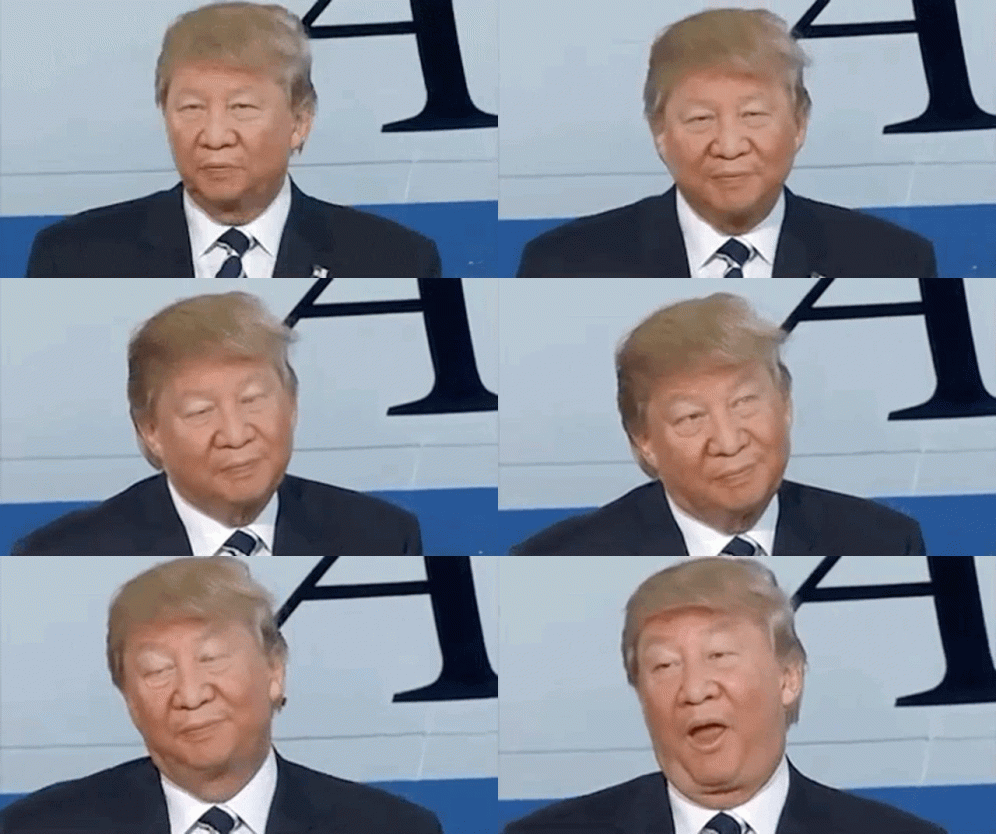
Comparing policies of a U.S. president to the Chinese Communist Party (CCP) is a complex and often debated topic. Critics and analysts who draw these parallels often focus on two key areas: trade and the consolidation of power.
Trade and Economic Policy:
Tariffs and Trade Wars: Some analyses, particularly from economic think tanks and academic institutions, highlight the use of tariffs by both the Trump administration and the CCP as a tool for economic control. Trump’s tariffs on Chinese goods, and China’s retaliatory tariffs, are seen by some as a “power-based” approach to trade. This is in contrast to the multilateral, rules-based system of the World Trade Organization that the U.S. has traditionally promoted.
State Intervention: The CCP’s economic system is characterized by state-led mercantilism and a high degree of government intervention in the market. Critics of Trump’s policies, such as his pressure on companies to keep jobs in the U.S. or his use of executive orders to influence business decisions, argue that these actions represent a shift toward a similar, more centralized economic approach.
Government and Political Power:
Centralization of Authority: Some sources, including opinion pieces and reports from organizations critical of authoritarianism, argue that Trump’s actions have shown a desire to centralize power. They point to his use of executive orders, his critiques of the judiciary, and his efforts to replace career civil servants with political appointees. This is sometimes compared to the CCP’s structure, where the party, and specifically the General Secretary, holds ultimate authority over all state institutions.
Controlling Information and Dissent: While the U.S. and China are fundamentally different in their approach to free speech, some critics have pointed to Trump’s rhetoric and actions toward the media as an attempt to undermine independent sources of information. This is seen by some as a tactic similar to the CCP’s tight control over state-run media and suppression of dissent.
It’s important to note that these are interpretations and analyses. Supporters of Trump’s policies would argue that the tariffs were a necessary step to address China’s unfair trade practices and that his actions were aimed at making the government more efficient and accountable, not at dismantling democratic institutions. The debate often revolves around whether these policies are a fundamental shift in the U.S. system or simply a different approach to traditional political and economic challenges.
History on Tariffs. America didn’t completely eliminate tariffs in the early 1900s, but it significantly reduced them for several reasons. The Sixteenth Amendment of 1913, which established the federal income tax, provided the government with a new, more reliable source of revenue, making tariffs less crucial for funding. Additionally, high tariffs were seen as a cause of corruption and a tool for monopolies. The Underwood-Simmons Tariff Act of 1913, championed by President Woodrow Wilson, was a key piece of progressive legislation that lowered tariff rates to promote competition and benefit consumers. However, a final wave of high tariffs, culminating in the Smoot-Hawley Tariff Act of 1930, was enacted to protect domestic industries during the Great Depression but is widely considered to have worsened it by sparking retaliatory tariffs from other countries and choking global trade. This ultimately led to a new era of trade policy focused on reciprocity and reduction of trade barriers.

 kbpublishing/wmstickellom.com
Leave a comment